Summer is changing across South Asia
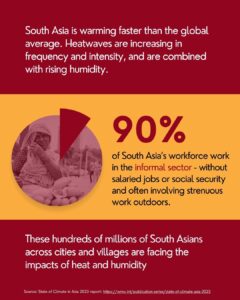
South Asia has always experienced hot summers. But climate change is making them longer, hotter and increasingly difficult to live through.
Across the region, rising temperatures are affecting people’s health, livelihoods and ability to work safely. As extreme heat becomes more frequent and intense, adapting to summer, which has always been a way of life, is getting increasingly difficult.

For millions of people, escaping the heat isn’t an option.
Nearly 90% of South Asia’s workforce is employed in the informal sector, where income depends on being able to work each day. Farmers, construction workers, street vendors, delivery workers and many others spend long hours outdoors or in poorly ventilated spaces, often with little protection from extreme heat.
As temperatures rise, so do the risks to workers’ health, safety and livelihoods.
Why heat has become more dangerous
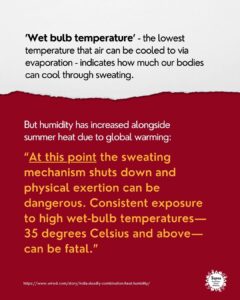
It’s not just rising temperatures. It’s rising humidity too.
As humidity rises alongside heat, our bodies struggle to cool themselves through sweating. Scientists describe these combined conditions using wet-bulb temperature, helping explain why extreme heat is becoming increasingly dangerous across South Asia.
For millions of people, climate change is making summer not just uncomfortable, but dangerous.

Extreme heat and intersectional injustices
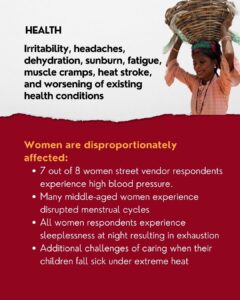
Extreme heat does not affect everyone equally.
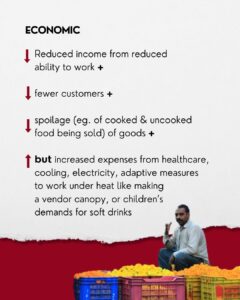
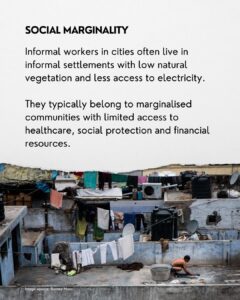
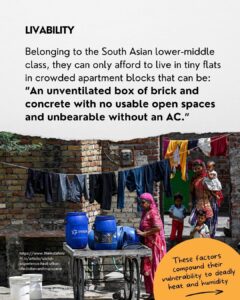
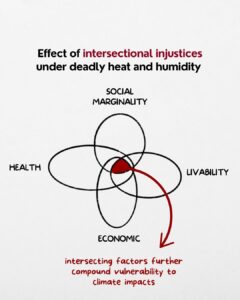
The risks people face are shaped by many interconnected factors—including where they live, the work they do, their access to healthcare and cooling, and the inequalities they already experience.
For many women, outdoor workers and people living in informal settlements, these challenges overlap. Climate change compounds existing inequalities, creating intersectional injustices that make it harder to stay healthy, earn an income and recover from extreme heat.
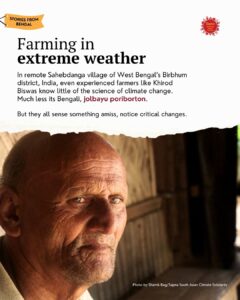
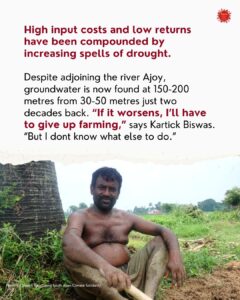
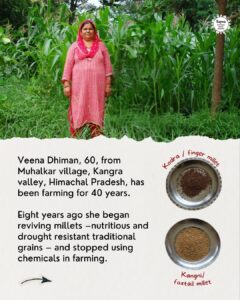
Farming on a changing climate
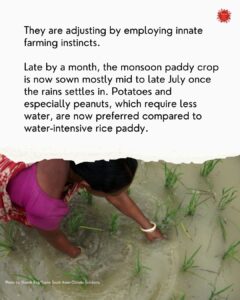
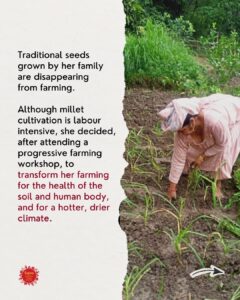
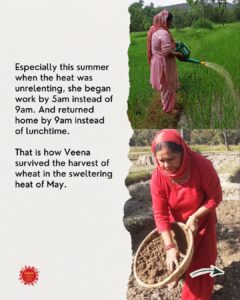
Across South Asia, farming has always depended on reading the seasons. Farmers have long relied on local knowledge to decide when to sow, irrigate and harvest.
Today, those rhythms are becoming less predictable. Rising temperatures, changing rainfall patterns and more frequent extreme weather are making farming increasingly uncertain, threatening both livelihoods and food security.
Why traditional cooling solutions are no longer enough
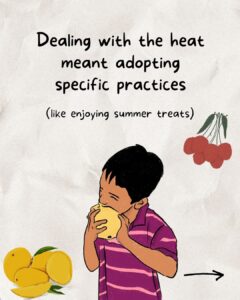
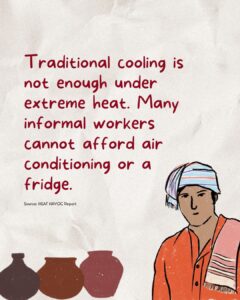
For generations, communities across South Asia developed practical ways to live with summer. Cooling foods and drinks, earthen pots, khus (vetiver)mats, and gamchas (cotton scarf-towel) all helped people cope with seasonal heat.
These traditional cooling solutions remain valuable today. But they were developed for a different climate.
Today’s summers are hotter, more humid and often last longer than before. For many people traditional methods alone are no longer enough to keep them safe.



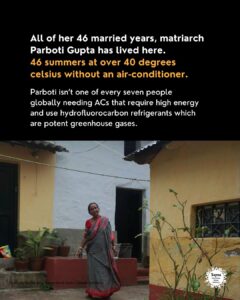
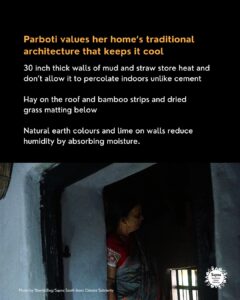
Traditional architecture also offers important lessons. In West Bengal, Parboti Gupta’s mud home stays cool naturally through thick earthen walls, shaded verandahs and ventilation—showing how homes can be designed to work with the climate rather than against it.


Traditional knowledge remains one of South Asia’s greatest strengths. But communities cannot be expected to adapt alone. Protecting lives and livelihoods now requires investment in climate adaptation, stronger public infrastructure and urgent action to address the root causes of climate change.
What needs to change
Communities across South Asia are already adapting to a changing climate, but responsibility cannot rest with individuals alone.
Protecting people from extreme heat means investing in public cooling infrastructure and strengthening protections for outdoor workers.
Everyone has a role to play
Whether you’re part of the South Asian diaspora or an ally, you can help amplify the stories of communities living on the frontlines of climate change.
- If you’re part of the South Asian diaspora, share these stories, support community-led organisations and help keep climate justice in South Asia visible.
- If you’re an ally, listen to the lived experiences of affected communities and support organisations working alongside those on the frontlines.
Leave a comment